
Legacy Over Silence: Hamilton, Confession and America’s First Sex Scandal
Lucy Crawford
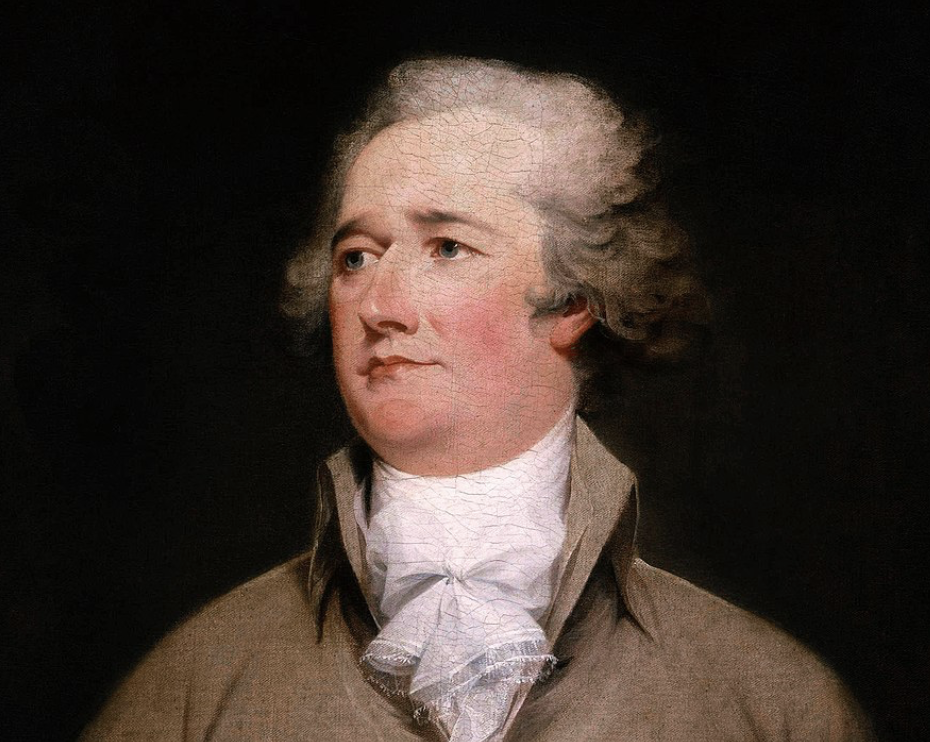
Alexander Hamilton, former Secretary of the Treasury and leading Federalist, was of Caribbean origin – an outsider whose brilliance and insecurity shaped his obsession with legacy in post-revolutionary America. In 1797, he published a pamphlet that would both define and dismantle his public reputation. Imagine opening a ninety-seven-page confession, the ink still wet, the nation’s most ambitious man begging the page to clear his name. The Reynolds Pamphlet (1797), aiming to refute allegations of financial misconduct, instead exposed Hamilton’s affair with Maria Reynolds, wife to James Reynolds. In a single gesture, Hamilton turned secrecy into spectacle. The pamphlet was less a defence than a performance: part legal deposition, part love letter, part self-portrait in panic.
Hamilton’s pamphlet functioned as a performative assertion of virtue- one that ultimately failed to navigate the volatile cultural terrain of the early American republic. What ruined Hamilton wasn’t the affair itself, but the explanation.
Whispers of corruption had followed him through the 1790s, as Secretary of the Treasury. When investigators uncovered a trail of payments from Hamilton to James Reynolds, they saw embezzlement; Hamilton, desperate to defend his integrity, offered a different narrative. The money, he claimed, was given “for the connection with Ms. Reynolds,” hush money disguised as debt. This was proof not of embezzlement but of adultery.
Hamilton’s candid admission of “intercourse” with Ms. Maria Reynolds exposed the fragility of both his moral and economic credibility. In confessing to the affair, he hoped to protect his honour. Instead, he obliterated it.
His confession was oddly intimate, even sensual in its detail; he described his meetings with Maria with a lawyer’s precision turned voyeuristic upon the page. “This confession is not made without a blush,” he admitted, a line that exposed the very vulnerability he was trying to suppress.
The pamphlet’s tone wavered between legal defence and love letter, and Hamilton’s emotional tendencies that accompanied this suggest an inability to maintain the stoicism expected of elite male figures. Yet his portrayal of Maria Reynolds too relied heavily on gender stereotypes. He crafts Maria as a seductress, a sexually charged woman whose “endless variety of shapes” made it “extremely difficult” to disentangle himself. Through his language, Hamilton shifts blame onto Maria’s sexuality, positioning himself as entrapped. By eroticising and belittling her in the same breath, Hamilton tried to preserve his masculine virtue, even as it exposed its fragility.
In trying to write morality, he accidentally wrote emotion and in the masculine code of the early republic, such emotion was perilous. Hence, his transparency poignantly backfired as opposing political figures such as the Jeffersonians used his emotional turmoil as public shame. Hamilton was painted as a feminised manipulator, lacking the self-control and rationality to harvest honour. Driven by legacy-building, Hamilton clashed with the gendered expectations of political masculinity in the early republic.
And then there was Eliza. Hamilton’s wife, his moral anchor and the quiet architect of his later legacy, was forced to read her husband’s “amorous connection” in the same print as the rest of the nation. The pamphlet’s intimacy was not only humiliating but cruel. Her silence became the counterpoint to his noise, the cost of his confession. In choosing exposure over discretion, Hamilton made Eliza’s dignity collateral damage. Fulfilling the script of republican womanhood, she embodied virtue not through speech, but endurance. In his noise, she vanished- and in her quiet, he survived.
The early American republic was a novel post-revolutionary society still negotiating its identity, manifested through evolving concepts of virtue and honour with a significant gendered dimension. As historian Joanne Freeman observes, in eighteenth century America, honour was a performance and privacy a privilege, few public men could afford. Pamphlets became weapons in these battles of character. Cheaply printed, quickly spread and impossible to contain once released, pamphlets carried rumour like wildfire, dragging private virtue onto a very public stage. In an era when scandal propagated across society, as historian Marcus Daniel notes, the “politics of intrusion” became a defining feature of American political culture.
The expansion of partisan journalism and print culture blurred the boundary between personal virtue and public credibility, meaning that Hamilton’s supposed transparency only intensified scrutiny. The uneasy eroticism deepened the scandal. For a public steeped in ideals of restraint,
Hamilton’s prose felt indecent- emphasised by the vivid detail of his misdoings. His need to be thorough, to prove control, exposed the very loss of it. The pamphlet became a portrait of masculine anxiety: a man so desperate to appear rational that he documented passion line by line.
In a bewildering act of self-preservation, Hamilton believed confession would protect his political legacy by mastering his own story. Instead, his ninety-seven-page confession, became America’s first great public spectacle of private failure. What began as a plea for virtue became a performance- an attempt to write himself into history rather than be erased by it. Two centuries later, Lin-Manuel Miranda’s Hamilton reimagines that same confession on the Broadway stage. The musical transforms humiliation into rhythm and scandal into song, suggesting that legacy is rarely clean and never silent.
As Hamilton’s character reflects in the show’s final act, the lights fade onstage, and his voice returns: “Legacy is planting seeds in a garden you never get to see.”
The irony is that his own garden bloomed from exposure: what destroyed his reputation in the eighteenth century immortalised him in the twenty-first. As the actor playing Hamilton says to his rival Aaron Burr, “If you stand for nothing, Burr, what’ll you fall for?” In publishing the pamphlet, Hamilton stood boldly, naively and fatefully for legacy over silence- and in doing so, made scandal the price of remembrance.