
Review- Winston Churchill: The Painter at the Wallace Collection
Raphael Roy Taylor
Before attending this show, I had certain preconceptions of Winston Churchill as a painter. As a figure whose artistic reputation is not their primary reputation, who didn't receive formal training and whom I most thought of as a Sunday painter, this major retrospective of Churchill as an artist seemed a perplexing decision for the Wallace Collection to have made. Churchill's extraordinary political career, to my mind, would surely render his paintings a mere distraction- an escape.
These preconceptions were swept aside- this show is a revelation.
The scale, extent, and development of Churchill's talent are extraordinary; inseparable from him as a great political figure, and as a complex, multifaceted individual.
He first took up painting in 1915, aged forty, as an escape from the fallout from the Gallipoli campaign, which saw him pushed out of his position as First Lord of the Admiralty. This was an existential crisis, from which his wife, Clementine, believed he would “die from grief”.
Amongst his first paintings were those from the front line and are Churchill’s only depictions of war.
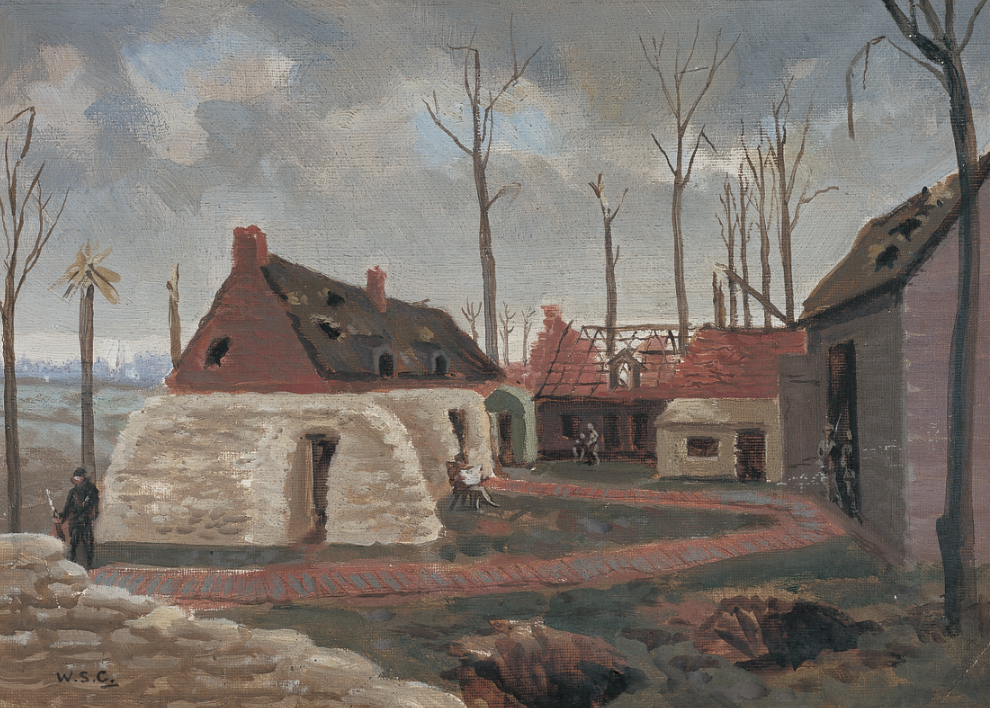
Plug Street (Ploegsteert), oil on canvas, 1916
Painted with striking simplicity, desolate figures are constructed from a few strokes to form, in his own words, “a sea of mud, mercifully veiled by the fog of war.” They hauntingly illustrate the loneliness and isolation the front imposed, and the reduction of inhabitants’ way of life to rubble.
While Churchill's subjects and techniques evolved, his fundamental approach to painting was consistent- a search for an intuitive truth rather than academic perfection.
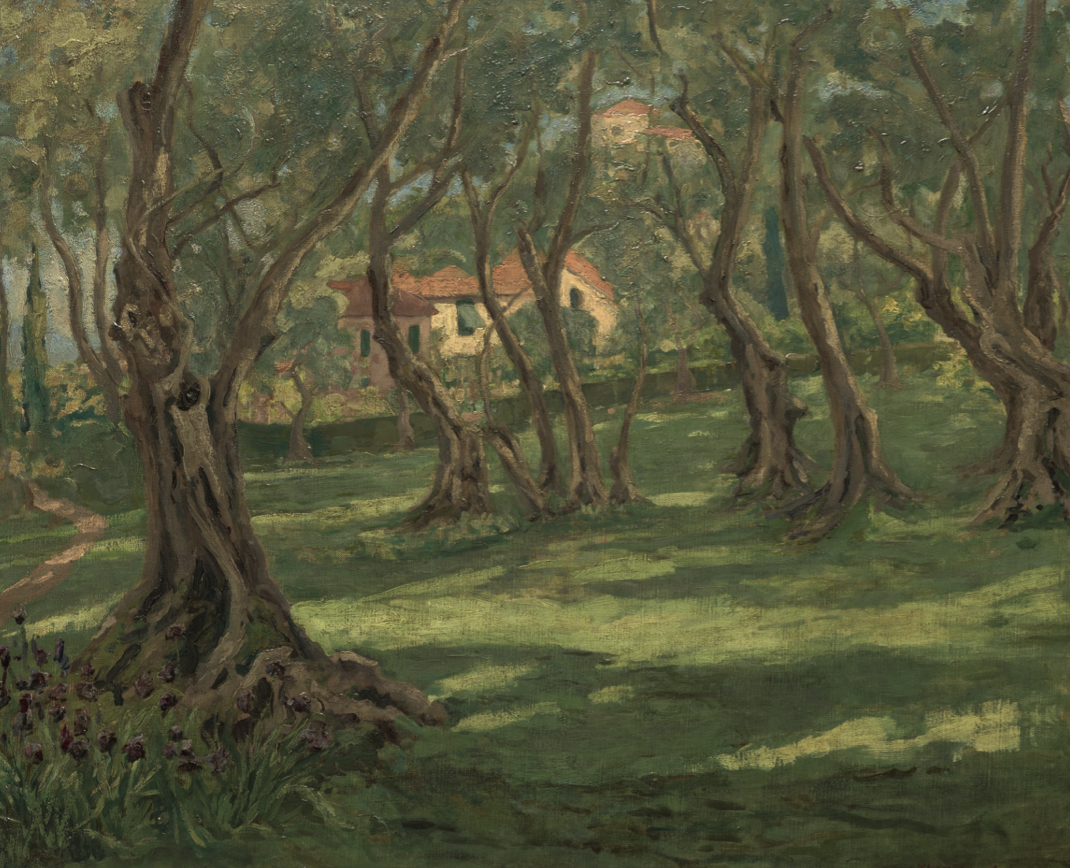
La Dragonnière, Cap Martin. Oil on canvas, 1930s
This is best exemplified by La Dragonnière, Cap Martin, where paint is applied expressively and effortlessly to create a composition of utmost serenity. A window- blind is painted with a single stroke; the swirling trees a reminder of van Gogh’s Olive Trees series. Picasso, on viewing at a 1945 Paris exhibition, remarked, “If that man were a painter by profession, he would have no trouble earning a good living”.
His painting is never purely representational and often is at its most evocative when Churchill was working over a particularly short timeframe. In Jerusalem, painted after the conclusion of the Cairo conference that he chaired as Colonial Secretary, buildings are depicted through single strokes of paint and the sky is daubed on rapidly. These idiosyncrasies make the image of the setting sun over this historic city, at such a momentous time, all the more impactful.
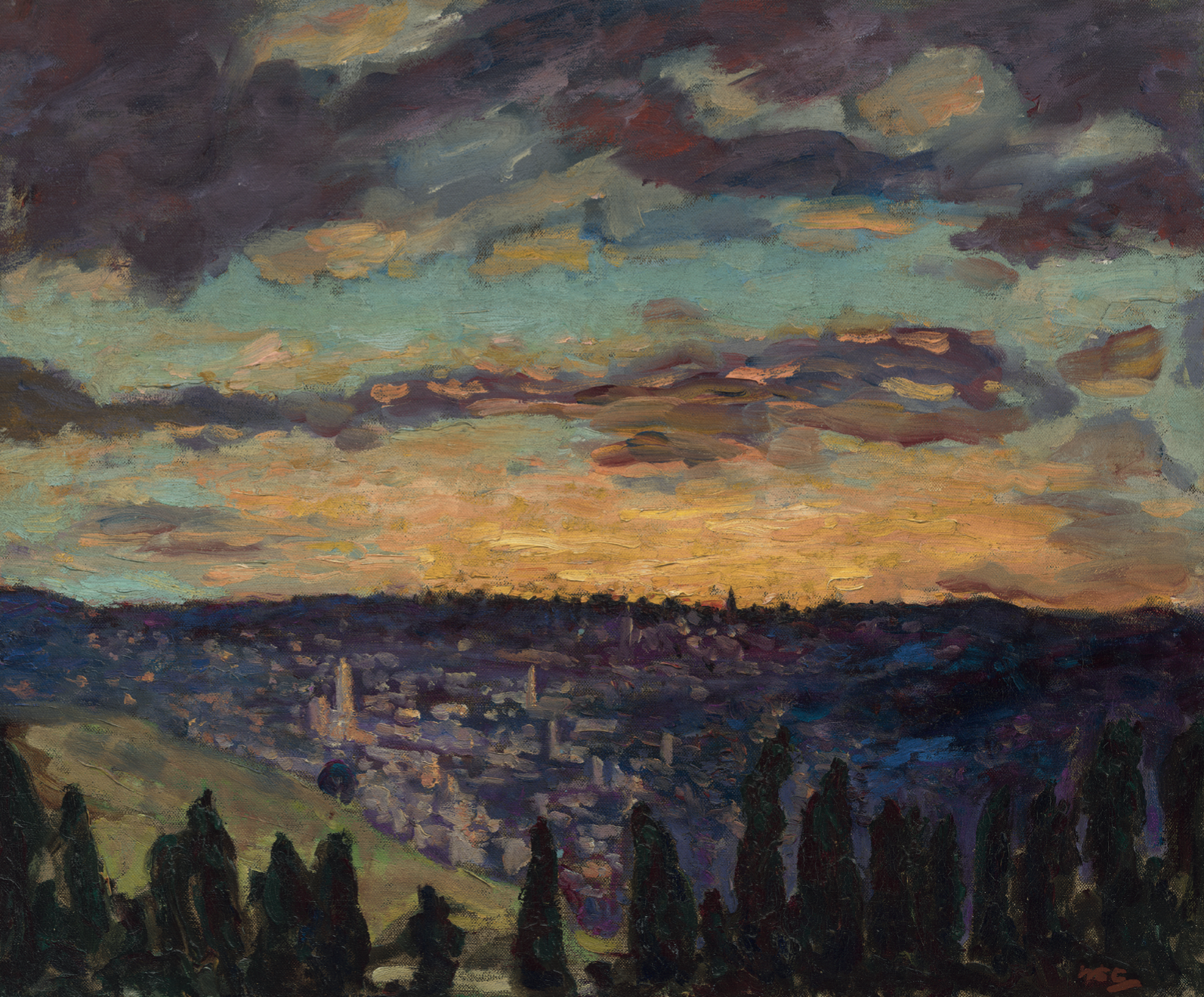
Jerusalem. Oil on canvas, 1921.
Whilst Churchill was not a professional painter, he was profoundly shaped by the influence of mentors who included Walter Sickert and William Nicholson.
His techniques, therefore, fluctuated and varied between more ephemeral compositions and more representational ones.
His life as a painter and a politician frequently overlapped- paintings were often gifted to friends and colleagues, and in 1943, the only painting he attempted during the Second World War was for President Roosevelt. Marrakech was one of Churchill's favourite places, and he visited countless times over 25 years. After the Casablanca conference between the two leaders, Churchill persuaded the American leader to travel south, then painted this scene of the Marrakech city walls, towered over by the Atlas Mountains.
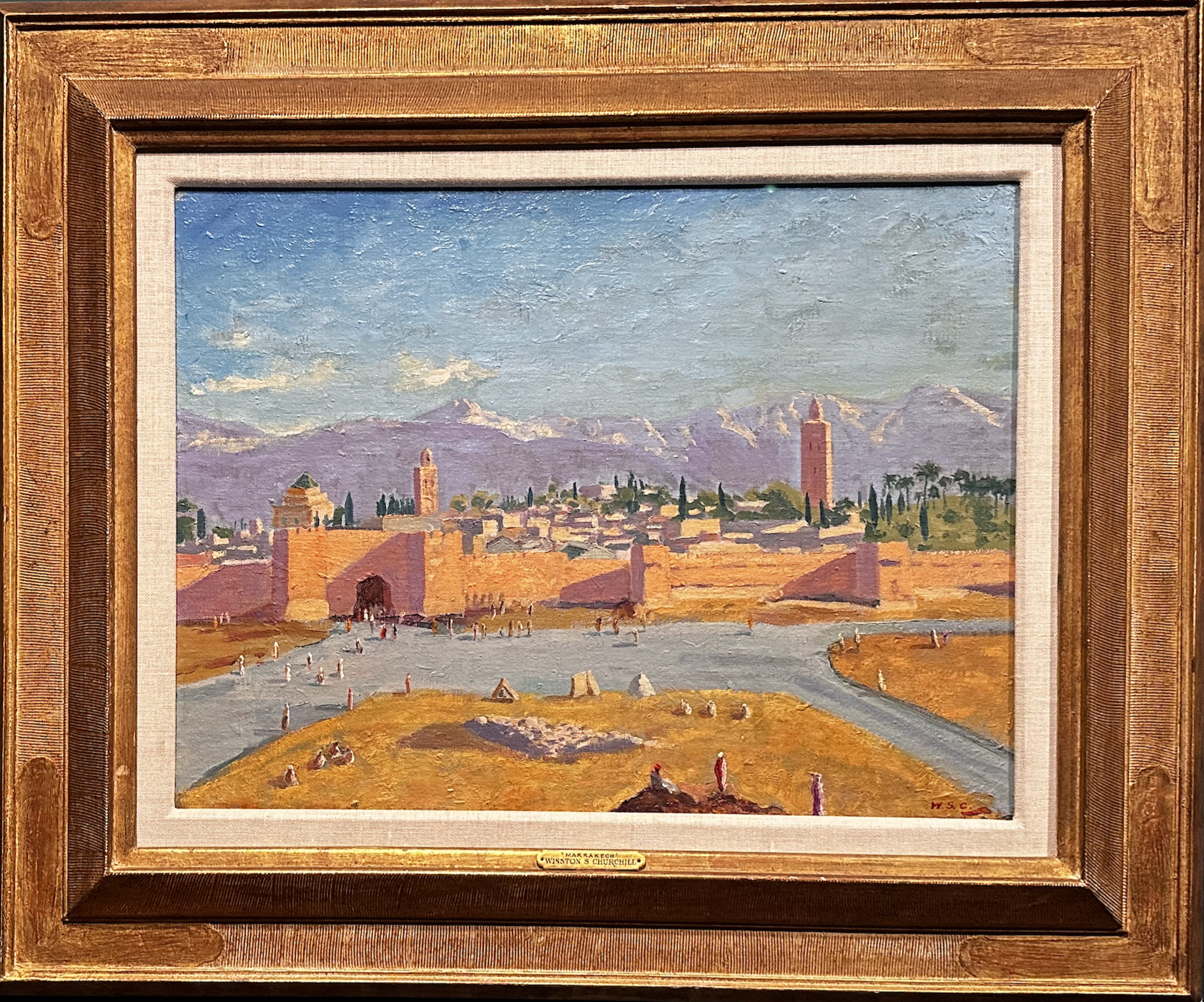
Tower of the Koutoubia Mosque. Oil on canvas, 1943.
It's quite astonishing to think that this serene image could have been vigorously constructed over the span of a day, as a token of Churchill’s appreciation for Roosevelt’s acquiescence to his proposal for a second front in Italy.
Churchill's compositional style was never staid nor conservative; instead, he embraced radical and unconventional viewpoints.
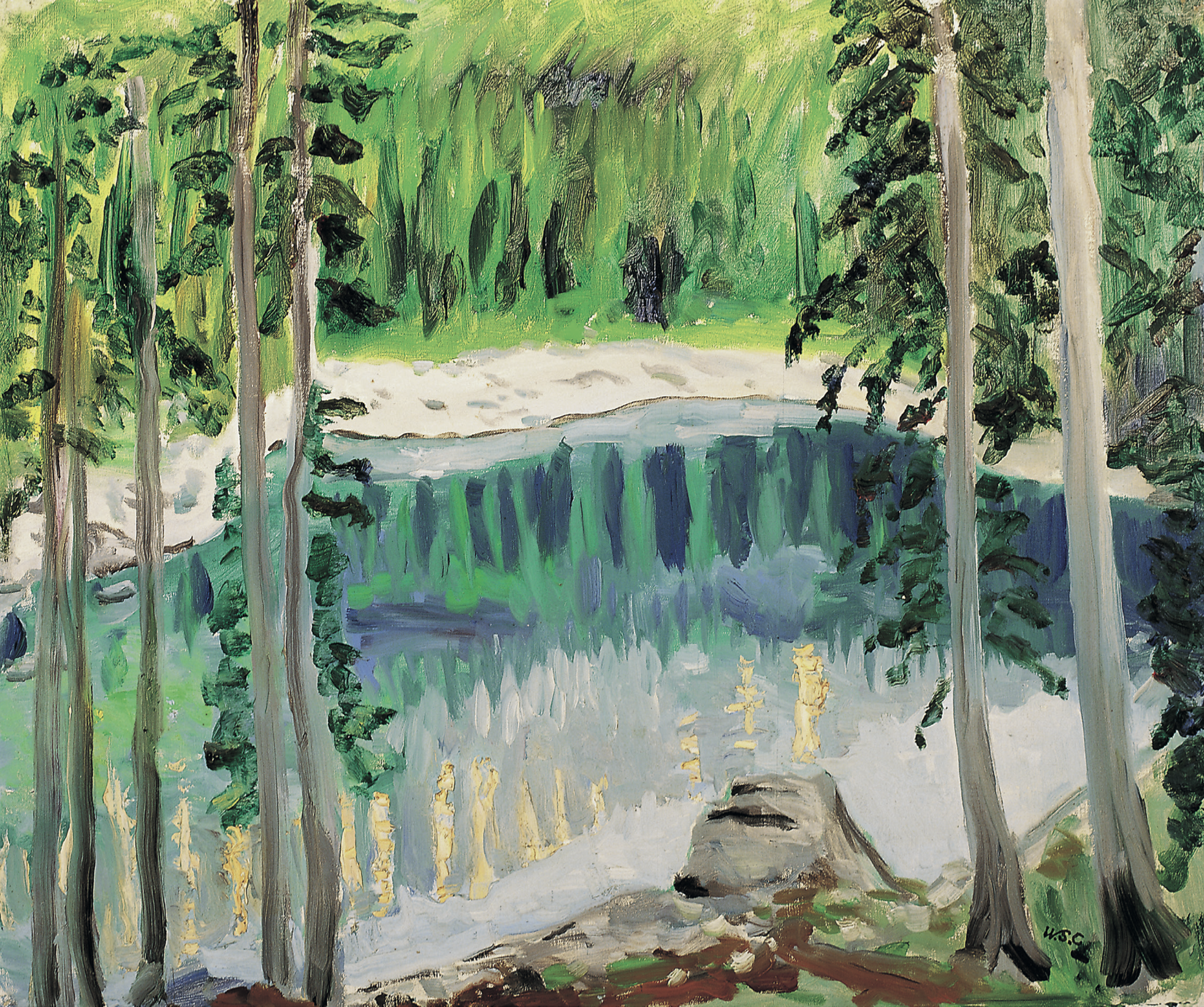
Sketch of Lake Carezza or “the 20-minute sketch”. Oil on canvas, 1949
This example, painted in a mere 20 minutes while en route from Lake Garda to Strasbourg, is remarkable for its bold construction, the river falling across the canvas instead of trailing into the horizon, created from strokes of vibrant colour.
Churchill's ability for such originality was appreciated by his wife Clementine, who took pains to hide this sketch for fear that he would work on it more.
What makes Churchill's art all the more endearing is his seeming lack of artistic confidence- he often submitted work to and won prizes at salons, most notably the Royal Academy, but this was almost always done under a pseudonym. His talent was far more than that of a Sunday painter, and he was among the most inventive and innovative of his generation.
The Wallace has similarly taken interventions in its temporary exhibition galleries to ensure that the presentation could be as thorough and categorical as possible- from the construction of walls to segment previously open spaces, to the voice of Darkest Hour’s Gary Oldman as Churchill in the audio guide.
These contribute to a sense of space between the works on the walls as well as a rich understanding of Churchill’s life and work. Approach this show with an open mind.
All images courtesy of the Wallace Collection. With thanks to the Wallace Collection for access to this exhibition.
Purchase the catalogue here: https://wallacecollectionshop.org/products/winston-churchill-the-painter-exhibition-catalogue